
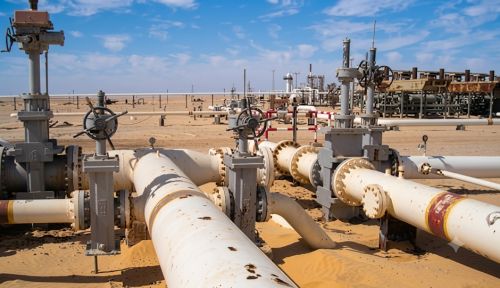
- Libya’s National Oil Corporation (NOC) and Shell are developing a comprehensive strategy to improve the country’s gas sector and unlock greater value from its natural gas resources.
- The partnership builds on agreements signed in 2025 under which Shell is assessing the hydrocarbon potential of the Al-Atshan field and other NOC-owned assets.
- The initiative forms part of Libya’s broader effort to attract international energy companies, increase hydrocarbon production and revive investment after years of underinvestment.
Last week, Libya’s state-owned National Oil Corporation (NOC) and Shell began discussions to design a comprehensive strategy that will improve the efficiency of the country’s gas sector and enhance the development of its natural gas resources.
The initiative extends beyond existing individual projects and reflects Tripoli’s broader objective of rebuilding an energy industry capable of attracting sustained international investment.
NOC Chairman Masoud Suleman and Shell’s Vice President for Iraq, the United Arab Emirates and Libya reviewed progress on the memoranda of understanding signed between the two companies. They examined technical studies covering the areas and fields included in those agreements and discussed the next phases of implementation.
The Libyan state oil company also seeks to establish a clear timetable for completing ongoing assessments and transitioning to well-defined operational programs. The objective is to gain a more comprehensive understanding of the targeted assets before approving potential development projects.
Natural Gas Takes Center Stage in Libya’s Energy Revival
The closer partnership with Shell comes as NOC gives natural gas a more prominent role in its national energy strategy.
The state-owned company plans to leverage the Anglo-Dutch energy group’s international expertise to develop a long-term roadmap that will improve sector performance, optimize resource development and increase the economic value of Libya’s gas reserves.
The cooperation builds on agreements announced in London in July 2025. Under those agreements, Shell committed to assessing the hydrocarbon potential of the Al-Atshan field and other assets wholly owned by NOC through technical and economic feasibility studies.
For Libya, the strategy serves two objectives. First, the country wants to improve the development of domestic gas resources to strengthen energy security and support industrial growth. Second, Libya aims to expand its gas export capacity at a time when natural gas remains strategically important for regional and European energy markets.
International Oil Majors Return to Libya
The renewed engagement between Shell and NOC forms part of Libya’s broader reopening of its energy sector to international oil and gas companies.
After nearly two decades without a major licensing round, Tripoli has sought to attract partners capable of providing the capital, technology and technical expertise needed to rebuild production capacity.
That effort accelerated after Libya launched a licensing round in 2025. Authorities announced the results in February 2026, awarding exploration rights on multiple blocks to international energy companies including Eni, Repsol, Chevron, QatarEnergy and TPAO. The parties subsequently signed new production-sharing agreements in June 2026.
NOC expects these partnerships to revive exploration, develop new assets and reverse the effects of years of underinvestment. The company also aims to increase hydrocarbon production significantly over the coming years, a target that will require the support of technically advanced international partners.
Shell’s renewed involvement carries particular significance because the company exited its Libyan exploration activities in 2012 after concluding that exploration results did not justify continued investment amid political and security instability.